
General Information
Start: Sep. 2026
End: Jul. 2027
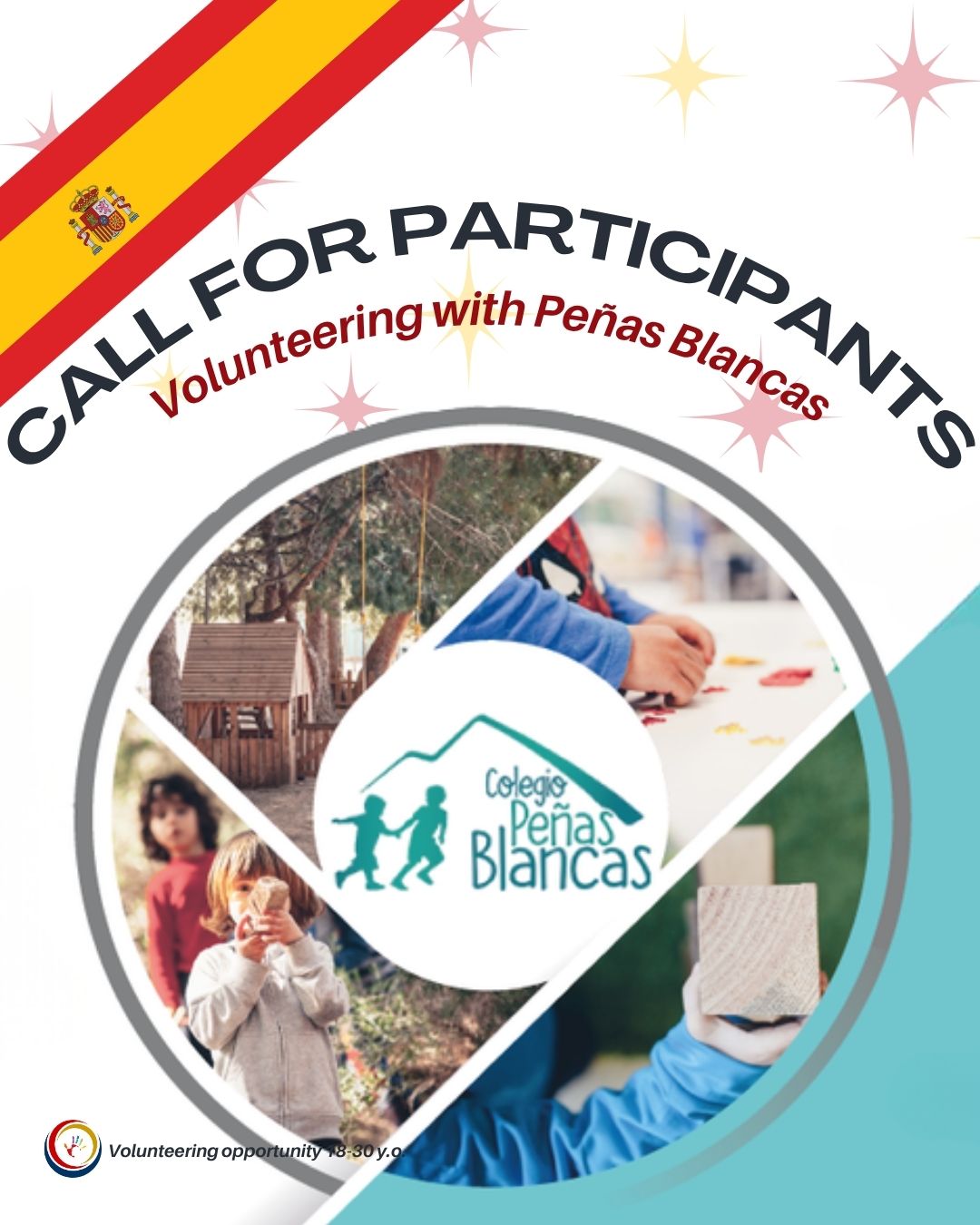
The volunteer will take part in various educational activities at Peñas Blancas School, supporting the teaching staff and participating in the daily life of the school community. A significant part of the educational work takes place outdoors, except on rainy, windy, or cold days (around 10–12 days per year). Two outdoor classrooms equipped with mobile all-terrain shelves have been created to facilitate these activities. The weekly schedule of the teaching staff at Peñas Blancas is 36 hours.
Working Schedule:
The volunteer will follow the same schedule as the school’s teaching staff. Their regular timetable will be Monday to Friday, from 8:30 a.m. to 2:30 p.m. In addition, once a week, usually on Thursdays from 3:00 to 5:00 p.m., there is a team meeting lasting around two hours, in which the volunteer will also take part. The day and time of this meeting may occasionally vary depending on the school’s needs.
Outside the hours when the children attend school, the volunteer will also:
· Participate in organizational and structural work with teachers.
· Attend weekly coordination meetings.
· Support the maintenance and organization of learning spaces.
· Help with the preparation of workshops or activities, especially if they wish to lead one themselves.
Daily Structure: The day begins with joint sessions focused on dialogue and concentration, covering mathematics and literacy in a cross-disciplinary way together with science, geography, language, music, and history. The second part of the day, called “Workshops”, follows a period of free play (“Blank time”), when children have access to materials but no specific activities are organized. The school has two primary groups (ages 6–8 and 9–12) and one infant group. These groups often mix, allowing children of different ages to work and learn together.
Volunteer’s Tasks: Depending on the needs of the school and the volunteer’s skills, activities may include:
Kindergarten:
· Supporting children in activities such as painting, writing, or free play.
· Helping teachers organize the classroom and collect toys.
· Assisting in the preparation of daily lessons and classroom materials for the youngest children.
· Helping to set up the classroom environment before activities and tidying up afterward.
· Supporting teachers during mealtime and lunch routines, helping children as needed.
Primary Education:
· Assisting children with language and maths exercises.
· Helping to prepare and clean up after science or cooking workshops.
· Supervising playtime with the teachers.
· Language Area (English and French): Promoting linguistic immersion by speaking English or French with the children. Helping with vocabulary, grammar, and pronunciation questions.
· Cultural Workshops (Optional): Designing and leading workshops about the volunteer’s own culture, such as cooking, traditional dances, or customs.
· Support for Foreign Children: Acting as a linguistic and cultural bridge between teachers and foreign students, especially when sharing a common language or nationality.
Additional Activities: Volunteers will also take part in:
· Workshops and presentations about the European Solidarity Corps Programme in secondary schools and at the University of Murcia.
· Creating monthly content (posts, articles, videos, etc.) to share their activities within the organization, helping to disseminate and promote the project’s results.
Role and Learning Opportunities: The main role of the volunteers will be to support the teaching staff in their daily educational work. Through this experience, they will:
– Improve their Spanish through daily interaction in an educational setting.
– Share their native language and culture, adding great value for both children and teachers.
– Contribute to a mutual exchange of cultures and languages, enriching the entire school community.
Our volunteering project seeks to promote the values promoted by the EU and the ESC Programme, such as solidarity, equality, justice, respect, fight against exclusion and xenophobia, etc.
More Information About the Volunteer’s Life
Practical arrangements: The schedule of the volunteer activities will be between 30 and 38 hours per week. The volunteer will work max. 38 hours on 5 days per week.
Holidays: According to the rules of ESC, volunteers must have 2 working days off per month.
Accommodation: The volunteers will live in a room in a shared flat located in the city of Cartagena together with other volunteers. The room and the flat will be fully equipped, and electricity, water, gas and internet will be covered by the lead organization (till the amount of 30€ per volunteer).
Pocket money: The volunteer will receive the monthly rate foreseen by the Spanish NA, 186€ per month.
Food: The volunteer will receive 184€ for food every month.
Local transport: Every volunteer will have a chance to choose a bike or bus card provided by the hosting organization if it is needed.
Language support: The volunteer is entitled to receive language support with an online platform, as stated on the ESC programme guide.
Medical insurance: The volunteer will be covered by a private insurance that will cover all the expenses not covered by the public health system (health, accident and civil liability insurance).
Travel costs: The volunteer will receive financial support for travel from his/her country to Spain and from Spain to his/her country once the project is completed, up to a maximum amount established by the European Commission according to the distance band.
Visa and residence permit fees: The volunteer will receive financial support for visa arrangements (if required).
Deposit: The volunteer will have to make a 370€ deposit that will be reimbursed once the project is ended and the volunteer leaves tidy, clean, and with no damage in the private room and common areas, and if the volunteer doesn’t leave the project without a justified reason before it ends.
How to Apply
Anyone interested after reading the info above, fill in this form: https://b24-hiozxe.bitrix24site.ru/crm_form_yrien/
Volunteer Profile
This project is aimed at young people between 18 and 30 years old who have not participated in any European volunteering project (EVS or ESC) before. We will give priority to the selection of young people with fewer opportunities.
The selection will be made based on the attitude, the willingness to participate, the motivation and the commitment to the values of the project rather than knowledge and skills of the candidates .
We value the responsibility, the spirit of initiative, the patience and the ability to step back from interpersonal conflicts in order to deal with them more effectively, and the enthusiasm and willingness to participate in the different activities offered.
No young person willing to participate in our project will be excluded for any reason (economic difficulties; social or geographical obstacles; cultural or ideological differences; sexual orientation, age, ethnicity, gender and gender identity, etc.).
About Colegio Peñas Blancas
The idea of creating the Peñas Blancas school was born in 2012 and 2013. A group of families who know each other from the association Lactando de Cartagena, and who meet in this association to discuss and reflect on many topics about attachment parenting, talked one day about having a school where their children and parents would be calm and comfortable.
From there, a working team was formed, which began to develop the educational project and to look for possible locations for the school.
In the summer of 2014, the first social and non-profit parents’ cooperative in the Region of Murcia was formed to manage the school, the Regional Ministry of Education has already approved the Peñas Blancas educational project, and the city council of Cartagena has ceded the facilities of the old public school “Ermita de Tallante”, which closed the previous year due to lack of children.
And since the 2014/2015 school year Peñas Blancas has been receiving children who learn through emotion, where they have a great capacity and freedom to decide on their learning process, where this freedom is associated with processes of responsibility, and where the emotional state of the children, teachers and families is taken care of very zealously. And it also has a teaching team in accordance with the aforementioned educational project.
At Peñas Blancas we learn in a different way, and it can be summarized by saying that learning takes place through the harmonious development of the three dimensions that exist in every human being: Thinking, Feeling and Acting.
Curiosity and respect for the pace of individual development, together with an optimal emotional state, are basic for the well-being of children, and an indispensable requirement for them to develop as autonomous, tolerant, empathetic, self-critical human beings, aware of the differences between people and their respect.
Our methodology is active, participatory and collaborative, where children are free to decide about their learning process. And this freedom is indispensably linked to responsibility.